Flying from Accra to the UK? How to Plan Your Return Journey
Author: Sameer Shah
Date: 09 Oct, 2026
Returning from Ghana to the UK may seem straightforward once your visit is nearly over, but there are still several details worth organising before departure. You might be returning after spending time with family, attending a wedding, enjoying a holiday or completing a longer stay.
Your return journey may also look different from the flight you took to Ghana. You could have extra luggage, gifts to bring home, a different departure time or a connecting flight to manage. Planning ahead helps you avoid unnecessary airport stress and gives you more control over your travel budget. From checking your ticket to preparing for UK border control, here is how to organise your journey from Accra to the UK.
1. Confirm Your Return Date and Flight Details
Before thinking about transport to the airport, make sure your return flight details are correct. If you booked a return ticket before leaving the UK, revisit your confirmation and check the date, departure time and airport. If you booked a one-way journey or changed your plans while in Ghana, confirm that your return booking is finalised.
Check the following details:
-
Your departure date and local departure time.
-
The airport you need to reach in Ghana.
-
Your arrival airport in the UK.
-
Your booking reference and ticket status.
-
Any changes to the flight schedule.
-
The baggage allowance and check-in requirements.
If you are attending a family event shortly before flying home, leave some flexibility in your schedule. A wedding, funeral, family gathering or road trip can run longer than expected, and you do not want to risk missing an international flight.
If you have not booked your return ticket yet, compare options through Hi5Tickets.com and check that your chosen dates work with your plans in Ghana.
Keep your booking confirmation accessible on your phone and, if useful, save an offline copy. That way, you can check the details even if your mobile connection is unreliable.

2. Choose the Right Route from Accra to the UK
When flying from Accra to the UK, you may be able to choose a direct flight or an itinerary with one or more connections, depending on your dates and destination. A direct flight can be convenient because it reduces the number of travel stages. This may be particularly useful if you have children, older relatives or several suitcases.
A connecting flight might offer a more suitable departure time or a different fare. However, you should consider the total journey time, transfer arrangements and the risk of delays.
| Route type | Potential benefit | What to check |
|---|---|---|
| Direct flight | Simpler journey with fewer stages | Price and arrival airport |
| One connection | More itinerary options | Transfer time and airport requirements |
| Longer connecting journey | May fit a particular budget or schedule | Overnight waiting, meals and accommodation |
| Flight to a different UK airport | May suit your final destination | Cost and time of onward transport |
Think about where you need to end up, not just where the plane lands. A flight arriving in London may not be the most convenient choice if you live in Manchester, Birmingham, Glasgow or another part of the UK. For a connecting itinerary, check whether both flights are on one ticket, whether your luggage is checked through and whether you need a transit visa for the connecting country.
Compare the available routes through Hi5Tickets.com and weigh up the complete journey before making a decision.
3. Check Your Baggage Before Leaving Ghana
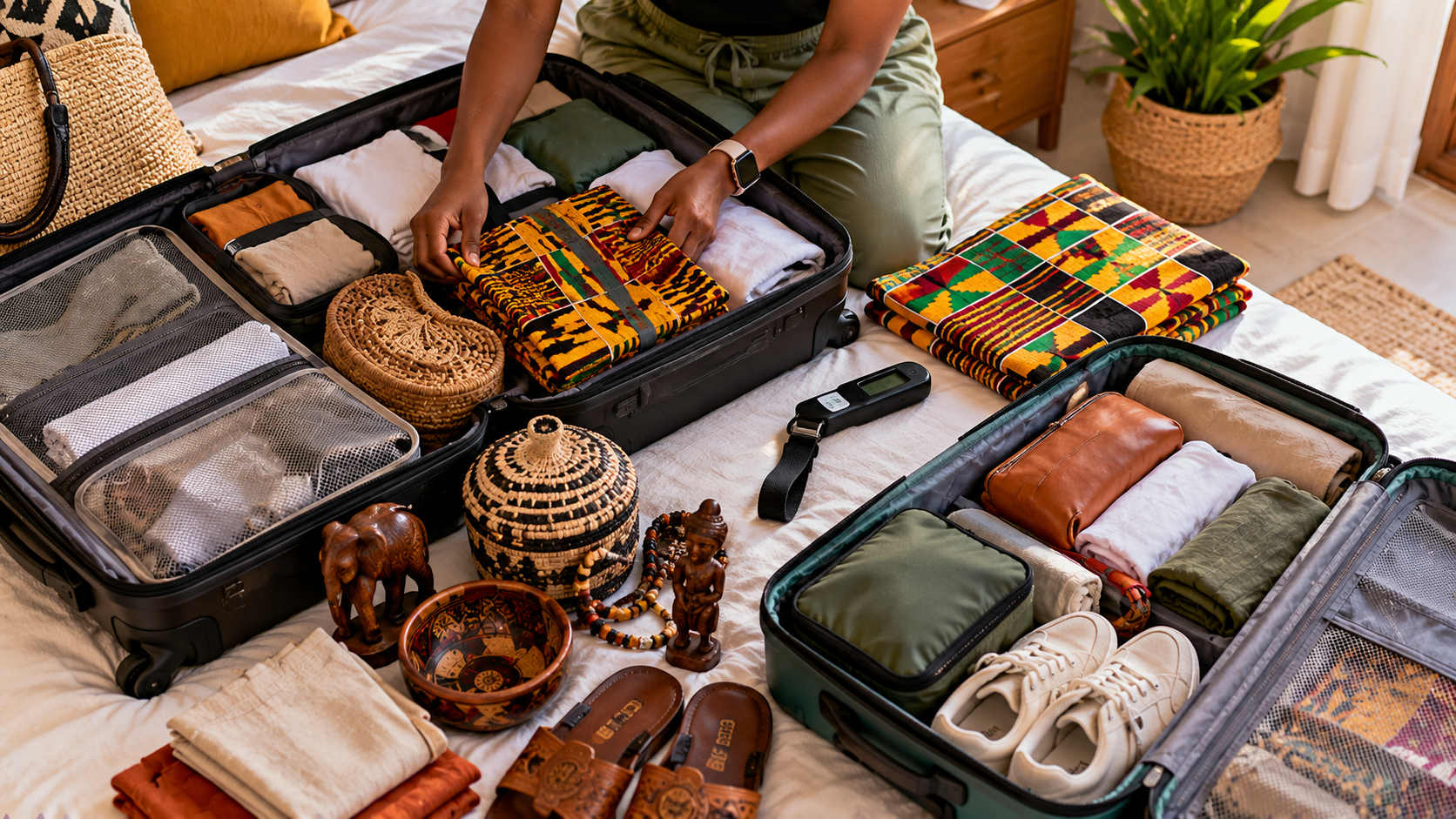
One of the biggest challenges on a return flight is managing everything you have accumulated during your stay. You may be bringing home gifts, clothing, traditional textiles, souvenirs or items purchased for relatives in the UK. Even if your outbound suitcase was within the limit, your return luggage may be heavier.
Before leaving your accommodation, check the allowance attached to your specific return ticket. Do not assume that the rules are identical to those on your outbound journey.
Review these details:
-
The number of checked bags included in your fare.
-
The maximum weight and dimensions for each suitcase.
-
Your cabin baggage allowance.
-
Any charges for excess or additional luggage.
-
Restrictions on liquids, sharp objects and other cabin items.
-
Rules for food, plants, animal products and other goods entering the UK.
Weigh your suitcases before travelling to the airport. If you are over the limit, rearranging items at home or paying for additional baggage in advance may be easier than sorting everything out at check-in. The UK Civil Aviation Authority's baggage guidance explains why baggage limits and additional fees should be checked before departure.
Also think about what you are packing. Some goods may be restricted or require declaration when entering the UK, so check the relevant customs rules before bringing gifts home.
4. Prepare for Departure from Kotoka International Airport
For most international departures from Accra, your journey will begin at Kotoka International Airport. Getting there on time is an important part of a smooth return.
Arrange your airport transport before departure day, especially if you are travelling early in the morning or late at night. Depending on where you are staying, road traffic can affect how long the journey takes.
Before setting off:
-
Confirm your airline's recommended airport arrival time.
-
Allow extra time for traffic and unexpected delays.
-
Make sure your driver knows the correct terminal or departure location.
-
Keep your passport, ticket and essential items in your hand luggage.
-
Check that all suitcases have been collected before leaving your accommodation.
Many airlines recommend arriving around two to three hours before a flight, but the correct time depends on the airline, destination and airport arrangements. Always follow your airline's instructions. The UK Civil Aviation Authority's airport guidance also recommends allowing enough time for check-in, baggage drop and security.
If you are travelling with children or older relatives, allow extra time for moving through the airport together. It is better to have a little time to spare than to arrive feeling rushed.
5. Organise Your Travel Documents
Travel documents deserve attention even when you are simply returning to a country where you normally live. Keep your passport and any required immigration documents in your hand luggage rather than packing them into a checked suitcase. Make sure every traveller has the documents appropriate to their nationality and immigration status.
Depending on your circumstances, you may need to check:
-
Passport validity and condition.
-
A valid UK visa or other permission to enter, where applicable.
-
Any relevant residence or immigration documents.
-
Documents for children travelling with you.
-
Travel insurance details and emergency contacts.
-
Transit documents if your itinerary includes a connection.
British citizens returning on a valid British passport generally follow a different entry process from visitors who require permission to enter the UK. If you hold another nationality or immigration status, check your individual requirements before travelling.
The official GOV.UK guidance on entering the UK explains that your identity document will be checked and that some travellers may need a visa or electronic travel authorisation, depending on their circumstances.
Check the latest requirements rather than relying solely on information from an earlier trip. If anything about your permission to return is unclear, seek guidance from the relevant UK authority before departure.

6. Plan Around Flight Times and Connections
Your departure time can influence how you organise the final day of your stay in Ghana. If your flight leaves late at night, you may have time for a relaxed morning before heading to the airport. An early departure, on the other hand, could require leaving your accommodation before sunrise.
Avoid arranging important activities too close to your flight. If you are travelling from Kumasi or another location outside Accra, consider the road journey and leave a suitable buffer for delays.
For connecting flights, check:
-
The scheduled arrival and departure times.
-
Whether you must change terminals.
-
Whether you need to pass through immigration during the transfer.
-
Whether baggage is checked through to your final destination.
-
Whether a missed connection would be protected under your ticket conditions.
A very short connection can leave little room for delays. A long connection may mean additional food, transport or accommodation costs. The best option is one that suits your budget without creating unnecessary pressure. If you are travelling with older relatives or anyone who needs assistance, contact the airline ahead of time to discuss available support. Confirm the arrangements before departure rather than assuming help will automatically be available.
7. Prepare for Arrival Back in the UK
Your journey is not finished when the aircraft lands. You may still need to pass through border control, collect your luggage and travel from the arrival airport to your home. Before leaving Ghana, consider how you will complete this final stage. If a family member is collecting you, confirm the arrival time and agree on where to meet. If you plan to use a train, coach, taxi or other transport, check the options for your arrival time.
On arrival in the UK:
-
Follow the signs for passport control and the correct queue.
-
Keep your passport and required documents accessible.
-
Collect your checked luggage and check that it belongs to you.
-
Follow customs instructions and declare goods where required.
-
Check your onward transport before leaving the airport.
UK border procedures depend on your nationality and travel documents. Some eligible travellers can use eGates, while others must speak to a Border Force officer. Follow the signs and official instructions at the airport. You should also review the rules for goods brought back from Ghana. Gifts and purchases may be subject to allowances or restrictions, and certain items must be declared. Check the official GOV.UK border guidance before travelling.
If you arrive late, have a long onward journey or are travelling with children, allow time to rest before continuing home.

8. Compare Return Flights and Additional Costs
If you have not booked your return journey, comparing flights carefully can help you avoid unexpected costs. Start with your preferred return date, then compare departure times, arrival airports, connection durations and baggage allowances. A low headline fare may not represent the lowest total cost once you add checked bags, seat selection or onward transport.
Use a simple comparison like this:
| What to compare | Why it matters |
|---|---|
| Total ticket price | Shows the cost for your chosen itinerary |
| Baggage allowance | Helps avoid excess-baggage fees |
| Departure time | Determines when you must leave your accommodation |
| Arrival airport | Affects your journey home in the UK |
| Connection details | Helps you assess transfer time and complexity |
| Change conditions | Matters if your return date might change |
| Additional transport | Includes travel to and from airports |
If your plans are flexible, compare nearby dates as well. However, do not assume a particular month or day will always be cheaper; prices depend on demand, availability and the exact route. You can compare flight options through Hi5Tickets.com and then review the full conditions of the fare before booking. If you have already purchased a return ticket, check whether changes are permitted and what fees may apply before making any adjustments.
It is also worth checking your travel insurance policy for relevant disruption cover. Do not assume that every delay, missed connection or change of plans will be covered.
9. Use a Final Return-Journey Checklist
Before leaving Ghana, take a few minutes to review your arrangements. A final check can help you spot small problems while there is still time to resolve them.
Return-flight checklist
-
Confirm the departure date, time and airport.
-
Check for airline schedule changes.
-
Arrange transport to Kotoka International Airport.
-
Confirm the baggage allowance and weigh your suitcases.
-
Check restrictions on gifts, food and other items.
-
Keep your passport and required travel documents in hand luggage.
-
Complete online check-in if available.
-
Save your booking confirmation and boarding pass.
-
Review transit requirements for any connecting flight.
-
Arrange transport from your UK arrival airport.
-
Check customs requirements for goods brought into the UK.
-
Keep essential medication and valuables accessible.

Final Thoughts
Flying from Accra to the UK is easier to manage when you organise the details before departure day. Confirm your flight, prepare your documents, check your baggage and allow enough time to reach the airport.
Think about the whole journey, including connections and transport after landing. If you are travelling with family or returning with extra luggage, a little additional planning can make a real difference.
If you still need to book your flight, compare the available options through Hi5Tickets.com and check the full fare conditions before confirming. With the right preparation, you can leave Ghana with fewer last-minute worries and focus on getting home comfortably.