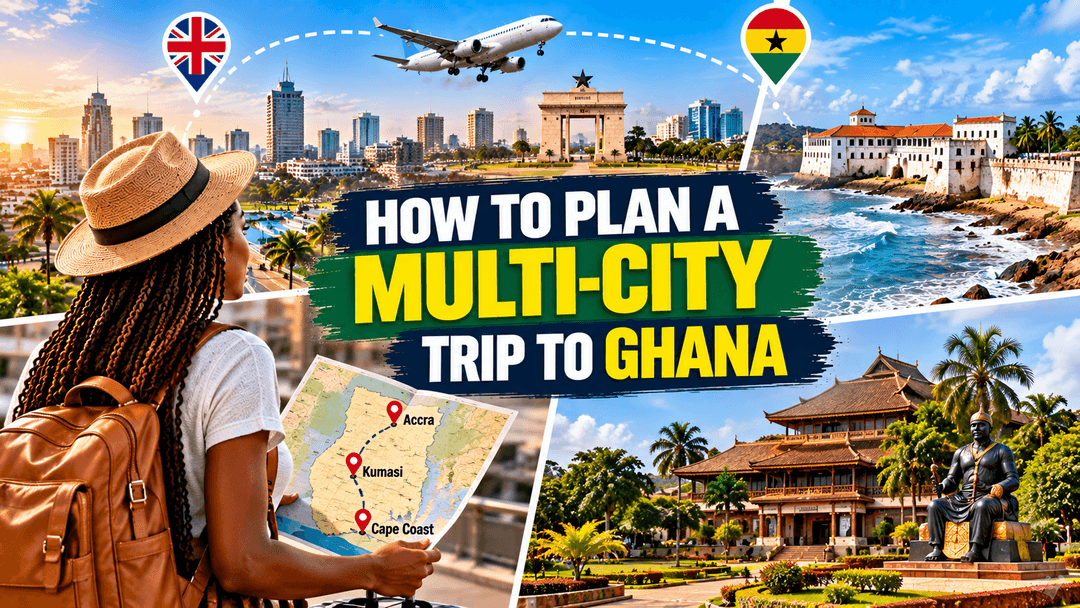
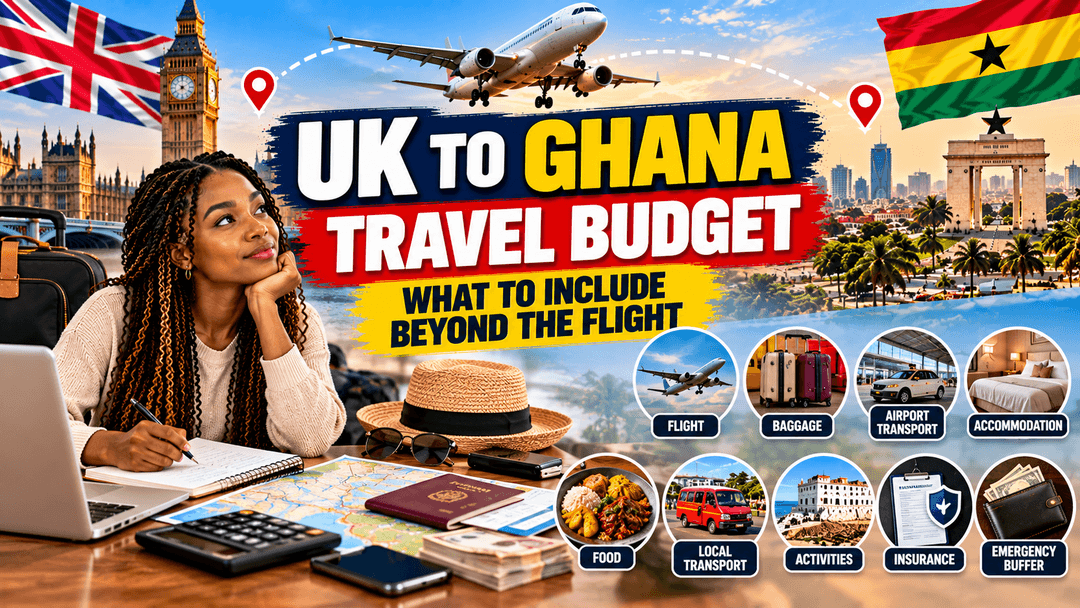
How Much Should You Budget for a UK to Ghana Trip Beyond the Flight? When planning a trip from the UK to Ghana, it is easy to focus almost entirely on the flight price. You find a good fare, book your ticket and feel like the biggest expense is sorted. But once you start adding accommodation, food, transport, activities, insurance, airport transfers, mobile data and spending money, the total cost can look very different. So, how much should you actually budget for a UK to Ghana trip beyond the flight? There is no single answer because your spending will depend on whether you are staying with family, booking hotels, travelling around Ghana, eating locally or choosing more comfortable restaurants and private transport. As a broad 2026 guide, independent travellers can work with roughly £35–£50 per day for a budget-style trip, while a more comfortable trip can move toward £50–£80+ per day, excluding the international flight. One 2026 Ghana travel-cost breakdown puts independent budget travel at around £35–£50 per day and mid-range travel at £50–£80. If you are comparing your flight first, Hi5Tickets.com can help you look at UK-to-Ghana travel options before you build the rest of your budget around your chosen itinerary. 1. Start With a Realistic Daily Ghana Budget The easiest way to build your Ghana budget is to start with a daily spending target. Instead of thinking, “How much will my entire holiday cost?”, break the trip into smaller categories. For example, a seven-day trip could include: Expense Budget Style Comfortable Style Accommodation £15–£35/day £40–£80+/day Food & drinks £10–£20/day £20–£40+/day Local transport £5–£12/day £15–£30+/day Activities £3–£10/day average £10–£30+/day Data & small extras £2–£5/day £5–£10/day Emergency buffer Separate fund Separate fund These are planning ranges rather than guaranteed prices. Actual costs vary considerably by city, season, accommodation type and lifestyle. For comparison, current 2026 travel-cost data puts Ghana's overall average daily visitor spending considerably below the UK, although different datasets produce different figures because they measure different traveller styles. The important thing is to create a budget that reflects how you actually travel. If you normally prefer private taxis, comfortable hotels and restaurants, a very low backpacker budget will probably leave you constantly worrying about money. 2. Accommodation Can Change Your Total Quickly Accommodation is one of the biggest variables in your Ghana budget. If you are staying with relatives for most of your trip, your overall spending could be much lower than someone booking hotels every night. For travellers paying for accommodation, current 2026 price data shows a wide range. Accra hotel estimates include roughly £49 per night for budget hotels, around £51 for a 3-star hotel and considerably more for luxury properties. Across Ghana, current estimates also show substantial differences between budget hotels, guesthouses, 3-star accommodation and higher-end properties. A useful way to plan is to decide which category best describes you: Staying with family You may spend very little on accommodation, but consider contributing toward household expenses, food or transport. Budget hotel or guesthouse This can work well if you mainly need a clean and practical place to sleep. Mid-range hotel Expect to spend more, but you may get better locations, air conditioning, breakfast, security and other conveniences. Premium hotel This can significantly increase your daily budget, particularly in Accra. If you are travelling between Accra, Kumasi and other destinations, remember that accommodation costs can multiply every time you change cities. That is why planning your route before booking hotels can save money. 3. Plan Your Food and Drink Spending Food is another area where your spending can vary dramatically. If you eat local meals and mix restaurants with casual food options, you can keep your daily food budget relatively manageable. Current Accra price estimates put an inexpensive restaurant meal at around £6, while a three-course mid-range restaurant meal can be around £19 per person. That gives you plenty of room to adjust your spending. You could budget around: £5–£10 per day for simple local meals £10–£20 for a mixture of local restaurants and casual dining £20–£40+ if you frequently choose mid-range or premium restaurants Extra for drinks, coffee, snacks and nightlife Ghana is also a great destination for trying local dishes rather than eating international food at every meal. Depending on where you travel, you might try jollof rice, waakye, kelewele, banku, fufu, grilled fish and other Ghanaian dishes. If you are staying with relatives, your food budget may look completely different because some meals could be prepared at home. One important tip: don't create a food budget based on UK restaurant prices. Instead, decide what type of food experience you want and build your allowance around that. 4. Budget for Transport Around Ghana Your transport budget can become surprisingly important if you plan to move around Ghana. A traveller staying mainly in one Accra neighbourhood will have very different transport costs from someone travelling between Accra, Kumasi, Cape Coast and other destinations. Current 2026 Accra estimates put public transport journeys at around £1 and taxis at roughly £1 per kilometre, although actual prices vary by route, provider and negotiation. You may use a combination of: Trotros Local buses Ride-hailing services Taxis Private drivers Intercity buses Domestic flights Car hire For a budget trip, public transport and shared options can reduce costs. For convenience, particularly when carrying luggage or travelling with family, private vehicles and ride-hailing can make more sense. If you plan to visit several cities, don't only calculate the price of individual journeys. Add up the whole transport route. For example: Accra → Kumasi → Cape Coast → Accra could cost significantly more than simply staying around Accra. And if you are still comparing UK-to-Ghana flight options, you can use Hi5Tickets.com to consider the arrival airport and overall itinerary before deciding how much onward transport you will need. 5. Set Money Aside for Activities and Experiences A Ghana trip is about more than accommodation and food. You may want to visit historical sites, beaches, markets, museums, cultural attractions or organised tours. Some experiences are inexpensive, while guided excursions and private tours can quickly increase your spending. For example, current 2026 Accra estimates show that attractions, food and transport can all vary significantly depending on the type of experience you choose. Before travelling, make a list of the experiences you genuinely want. For example: Cape Coast Elmina Kakum National Park Accra museums beaches cultural markets local food tours nightlife day trips guided excursions Then give each activity an approximate allowance. This is better than simply creating one large “fun money” category because you can identify which experiences matter most. If you have a limited budget, spend more on the experiences you will remember and less on things that are not important to you. 6. Remember Insurance, Data and Other Travel Costs The daily budget is only part of the story. There are several smaller expenses that can easily be forgotten when planning a UK-to-Ghana trip. Consider: Travel insurance GOV.UK recommends appropriate travel insurance for Ghana and says your cover should reflect your itinerary, planned activities and emergency expenses. The price depends on factors such as your age, trip length, medical history, activities and level of cover. Mobile data You may want a Ghanaian SIM, eSIM or roaming package depending on your phone and provider. Airport transfers Remember both sides of the journey: UK home → UK airport and Ghana airport → accommodation Visa and entry-related costs If applicable to your circumstances, include visa and other entry-related expenses in your overall trip budget. Gifts If you are travelling to Ghana to visit family, you may spend more than expected on gifts, clothing, food or items brought from the UK. Banking and card fees Check your bank's foreign transaction and cash withdrawal charges before leaving. GOV.UK advises travellers to make sure they have enough money for their destination and to know how to stop cards if they are lost or stolen. Before booking everything, you can also compare your UK-to-Ghana journey through Hi5Tickets.com and then add these additional costs to your personal budget. 7. Keep a Separate Emergency and Family-Spending Budget One of the biggest budgeting mistakes is spending your entire allowance before the trip is finished. Instead, create a separate emergency fund that you do not treat as normal spending money. A reasonable approach is to keep an additional amount for: unexpected transport medical expenses before insurance reimbursement changes to plans lost belongings extra hotel nights communication costs unexpected family commitments flight disruption You might also want a separate family or gift budget. This is particularly useful if your main reason for travelling is to visit relatives. Family visits can involve spontaneous meals, celebrations, local trips, gifts and other expenses that you did not include in your original itinerary. Having a separate allowance means you can enjoy these moments without destroying the rest of your holiday budget. Also avoid carrying all your travel money in one place. Keep your cards, cash and emergency funds organised and secure. 8. Example UK-to-Ghana Budgets for Different Travellers Now let's turn the different categories into realistic examples. Budget traveller — 7 days A traveller staying in budget accommodation, eating mostly local food and using affordable transport might plan around: Category 7-Day Estimate Accommodation £105–£245 Food £70–£140 Local transport £35–£85 Activities £20–£70 Data & extras £15–£35 Estimated total £245–£575 This excludes the international flight, insurance and major one-off expenses. Comfortable traveller — 7 days Someone choosing better hotels, more private transport and more restaurant meals might plan around: Category 7-Day Estimate Accommodation £280–£560+ Food £140–£280+ Local transport £100–£210 Activities £70–£210 Data & extras £35–£70 Estimated total £625–£1,330+ These are planning ranges, not fixed Ghana prices. For context, one 2026 Accra dataset estimates a typical visitor's daily spending at around $51 including accommodation, food and local transportation, while other datasets show higher figures depending on traveller style and what is included. Family traveller Families need a different approach because accommodation and transport can sometimes be shared, while food and attraction costs increase with each traveller. Instead of simply multiplying one person's budget by four, look at: family-room prices private vehicle costs children's meals attraction tickets luggage additional accommodation nights The biggest advantage is that some costs—such as one hotel room or one private car—can be shared. If you are travelling as a family, compare the full itinerary on Hi5Tickets.com before booking so you can see how the flight cost fits into your overall trip budget. 9. Final Thoughts So, how much should you budget for a UK to Ghana trip beyond the flight? For a simple independent trip, a useful starting point is around £35–£50 per person per day for budget-style travel. A more comfortable traveller may want £50–£80+ per day, particularly when paying for hotels, private transport and more frequent restaurant meals. These figures are planning guides rather than guarantees, and actual costs can vary significantly. For a seven-day trip, that means you could start planning around: Budget style: approximately £245–£350+ Mid-range style: approximately £350–£560+ Comfortable style: £560–£800+ Then add your separate costs for: international flights insurance visa or entry-related expenses where applicable airport transfers major tours gifts shopping emergency funds Your personal budget may be much lower if you stay with family, or much higher if you choose premium accommodation and private transport. The most useful approach is to build your budget around your actual itinerary, not somebody else's holiday. Before travelling, also check current Ghana travel advice. GOV.UK currently advises against all but essential travel to Bawku Municipality, and notes that travel insurance could be invalidated if you travel against FCDO advice. Finally, don't wait until after booking your flight to think about the rest of your expenses. Once you know your dates and route, use Hi5Tickets.com to compare your travel options, then add accommodation, food, transport, activities, insurance and an emergency buffer. A good Ghana travel budget should not simply tell you how much you can spend. It should tell you how much you can comfortably spend without worrying about money throughout the trip. Quick Ghana Budget Checklist Check your flight cost separately. Decide whether you are staying with family or booking accommodation. Set a realistic daily food allowance. Estimate local and intercity transport. Budget for activities before arriving. Include travel insurance. Plan for mobile data and communication. Allow money for gifts and family events. Keep an emergency fund separate. Check foreign exchange and card fees. Keep some backup money available. Check the latest Ghana travel advice before departure. Compare your full itinerary rather than only the cheapest flight. With these costs planned in advance, you can enjoy your Ghana trip with a much clearer idea of where your money is going.
Learn More


 Flight
 Hotel
Hotel





 .com?
.com?