Missed Connection on a Ghana Flight: What to Check Before You Rebook
Author: Sameer Shah
Date: 14 Sep, 2026
First, Work Out Why You Missed the Connection
The reason you missed your connecting flight is one of the first things you should establish.
For example, there is a major difference between:
- Your first flight arriving late
- A long airport security delay
- A terminal transfer taking longer than expected
- A problem with your original flight
- You arriving late at the airport yourself
- A self-connection between separately booked tickets
If your first flight was delayed and caused you to miss a protected connection on the same booking, your airline may have procedures for rebooking you.
If you simply arrived too late for check-in or boarding, the situation can be very different.
Before making any payment, speak to the airline or booking provider and explain exactly what happened.
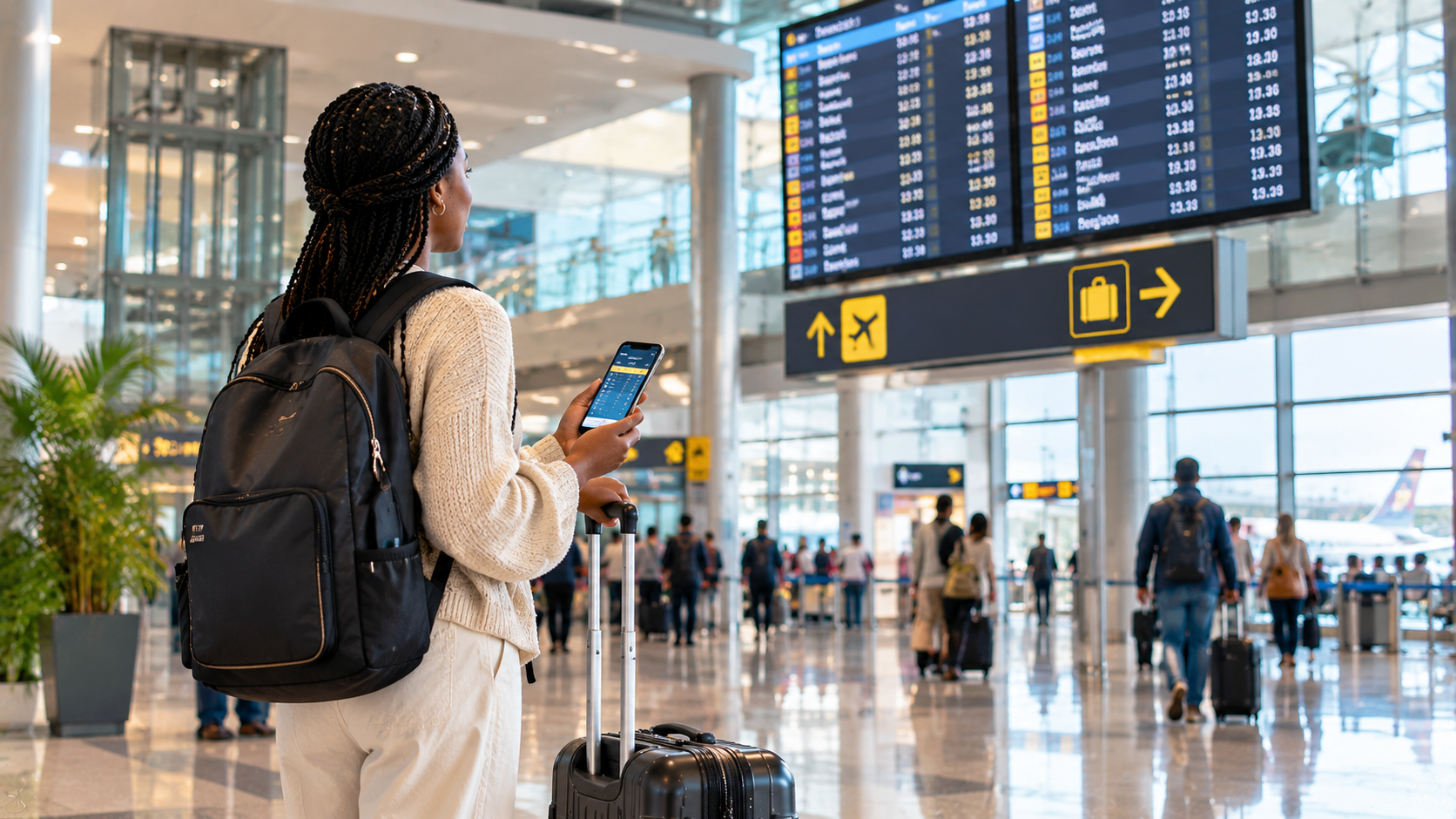
Check Whether Both Flights Are on the Same Booking
This is one of the most important checks.
Suppose your itinerary looks like this:
|
Journey |
Booking Type |
Potential Situation |
|
London → Connecting Airport → Accra |
One booking |
Airline may assist if disruption causes missed connection |
|
London → Connecting Airport |
Separate ticket |
You may have to arrange the next flight yourself |
|
Accra → Connecting Airport → London |
One booking |
Check airline's rebooking procedure |
|
Accra → Connecting Airport |
Separate ticket |
Greater responsibility may fall on traveller |
A single booking does not automatically mean every situation will be covered, but it can make a significant difference.
If you have separate tickets, treat the second flight as a separate contract unless the airline or booking provider confirms otherwise.
Don't Immediately Buy a New Ticket
When people miss a connection, panic can lead to expensive decisions.
You may see a flight departing in two hours and think:
“I need to book this immediately.”
Before doing that, check whether your original airline or booking provider can move you to another available flight.
Ask:
- Can I be rebooked?
- Is there another flight available today?
- Can I use my original ticket?
- What happens to my checked baggage?
- Will I receive a new boarding pass?
- Do I need to pay anything?
- Where should I wait for further instructions?
If you purchase another ticket before checking your options, recovering the cost may become more complicated.
Check Your Baggage Situation
Your baggage can become particularly important after a missed connection.
If your luggage was checked through to your final destination, ask the airline where it is now.
There are several possibilities:
- Your bag may remain in the airport baggage system.
- It may have been transferred toward the original connecting flight.
- It may be held for collection.
- It may continue on a later flight.
- You may need to collect and re-check it depending on the itinerary.
Do not assume your luggage will automatically follow you onto a new flight.
Ask the airline to confirm the baggage arrangements before leaving the airport.
Find Out When the Next Available Flight Is
Once you know your original booking status, look at alternatives.
Don't focus only on the earliest departure.
Consider:
- Departure time
- Arrival time in Ghana or the UK
- Number of stops
- Connection length
- Airport involved
- Baggage arrangements
- Whether you need accommodation
- Whether you have another commitment at your destination
A flight that leaves three hours earlier but arrives at a different airport may not actually be the best solution.
Compare Your Options
|
Option |
Advantage |
Possible Problem |
|
Same airline, next available flight |
Easier booking management |
May depart later |
|
Alternative airline |
Potentially earlier arrival |
May require a new ticket |
|
Longer connection |
More buffer |
Longer overall journey |
|
Overnight flight |
Can save daytime |
May affect sleep |
|
Next-day flight |
Sometimes easier to arrange |
May require accommodation |
The cheapest replacement flight is not necessarily the cheapest overall solution.
What If the Airline Caused the Missed Connection?
If your first flight was delayed or cancelled and that disruption caused you to miss a connection, contact the airline before making independent arrangements.
Depending on the circumstances and applicable passenger-rights rules, you may have rights relating to:
- Re-routing
- Refunds
- Assistance while waiting
- Food and refreshments in qualifying situations
- Accommodation where appropriate
- Potential compensation in certain circumstances
The exact rights depend on the route, airline, circumstances and applicable regulations.
Keep records of the disruption, including boarding passes, booking confirmations, delay notifications and receipts.
Keep Evidence of Everything
A missed connection can become much easier to resolve when you have documentation.
Save:
- Original booking confirmation
- Boarding passes
- Baggage receipts
- Airline messages
- Delay notifications
- Rebooking confirmation
- Receipts for reasonable expenses
- Emails or messages with the airline
- Details of conversations with staff
If you need to make a claim later, these documents can be useful.
What If You Missed the Connection Because of Your Own Delay?
Not every missed connection is the airline's responsibility.
For example, you could miss your flight because you:
- Arrived late at the airport
- Took too long during a personal stop
- Went to the wrong gate
- Failed to follow boarding instructions
- Did not allow enough time for airport procedures
In these situations, you may need to purchase or arrange another flight yourself.
Check your booking terms before assuming that a refund or free rebooking is available.
Be Careful With Self-Connections
Self-connections require extra planning.
Imagine booking:
London → Airport A
and separately:
Airport A → Accra
Even if the two flights appear to connect perfectly on a search screen, they may not provide the same protection as a single itinerary.
You may need to:
- Collect baggage
- Go through immigration
- Check in again
- Pass security again
- Meet the second airline's check-in deadline
A short connection that looks attractive on paper can become risky when the flights are separately booked.
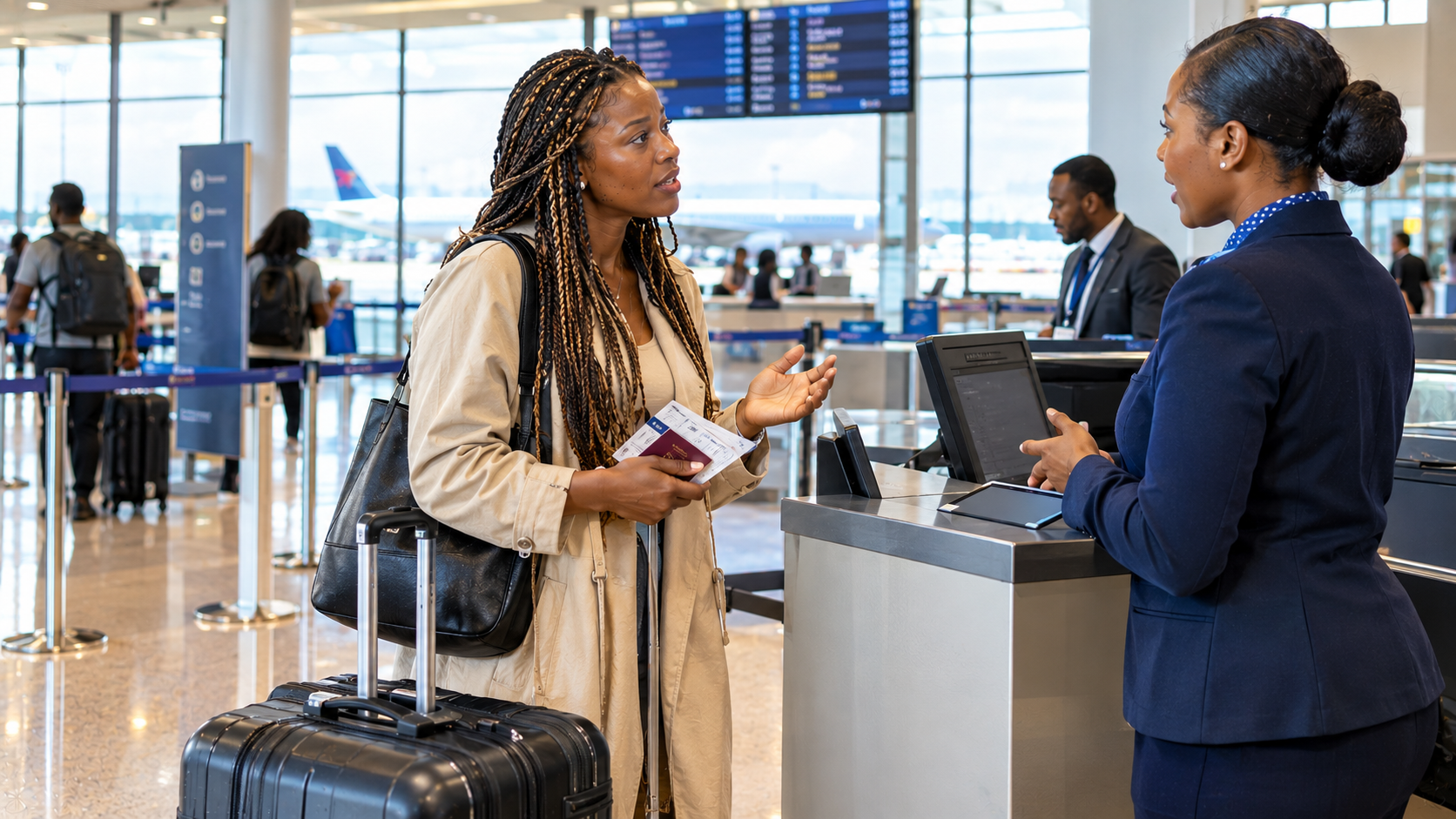
If You Need to Rebook, Compare the Full Cost
Before buying a replacement flight, calculate the total cost.
|
Expense |
Example Consideration |
|
Replacement ticket |
New airfare |
|
Airport transport |
Taxi, train or bus |
|
Hotel |
If overnight stay is required |
|
Food |
Waiting period |
|
Baggage |
Possible additional charges |
|
Seat selection |
May apply again |
|
Change fees |
Depending on ticket rules |
A £250 replacement flight could effectively become £450 after transport, baggage and accommodation.
That is why checking your original booking first is so important.
How to Reduce the Risk of Missing a Connection
You cannot eliminate every travel disruption, but you can make your itinerary more resilient.
Choose sensible connection times rather than selecting the shortest possible connection simply because it is cheaper.
Also consider:
- Airport size
- Terminal changes
- Security requirements
- Immigration procedures
- Whether you have checked baggage
- Whether flights are on one booking
- Your familiarity with the airport
A slightly longer connection can provide valuable breathing room.
Planning Your Ghana Flight With Hi5Tickets
When comparing flights, it helps to look beyond the headline fare.
Hi5Tickets allows travellers to search flight options and compare itineraries before booking.
When selecting your journey, pay attention to the complete itinerary rather than just the departure price. Look at the number of stops, airports and overall journey structure so you understand what you are booking.
Frequently Asked Questions
What should I do first after missing a connecting flight?
Contact the airline or booking provider before buying another ticket. Find out whether your original booking can be rebooked.
What happens to my checked baggage?
Ask the airline to confirm where your baggage is and whether it will be transferred to your new flight or needs to be collected.
Is a missed connection always the passenger's responsibility?
No. If an earlier flight disruption caused the missed connection, the airline may have obligations depending on the booking and applicable passenger-rights rules.
Are separate tickets risky for connections?
They can be. If the first flight is delayed, the second airline may treat you as a passenger who simply failed to arrive for the flight.
Should I choose a longer connection?
A reasonable buffer can reduce the risk of missing your next flight, particularly when travelling through a large or unfamiliar airport.
Internal Link Opportunities
Use these when the relevant articles are live:
- How to Choose the Right Flight Option → anchor: “compare your flight options”
- Direct or Connecting Flight to Ghana? → anchor: “direct versus connecting flights”
- How Long Does It Take to Fly from London to Accra? → anchor: “overall journey time”
- What to Do If Your UK-to-Ghana Flight Is Delayed or Cancelled → anchor: “flight delays and cancellations”
- The Complete UK to Ghana Flight Planning Checklist → anchor: “before-you-fly checklist”